Decoding Regulatory Disclosures That Shape Promotional Dining and Live Show Packages Across Swiss Gaming Destinations

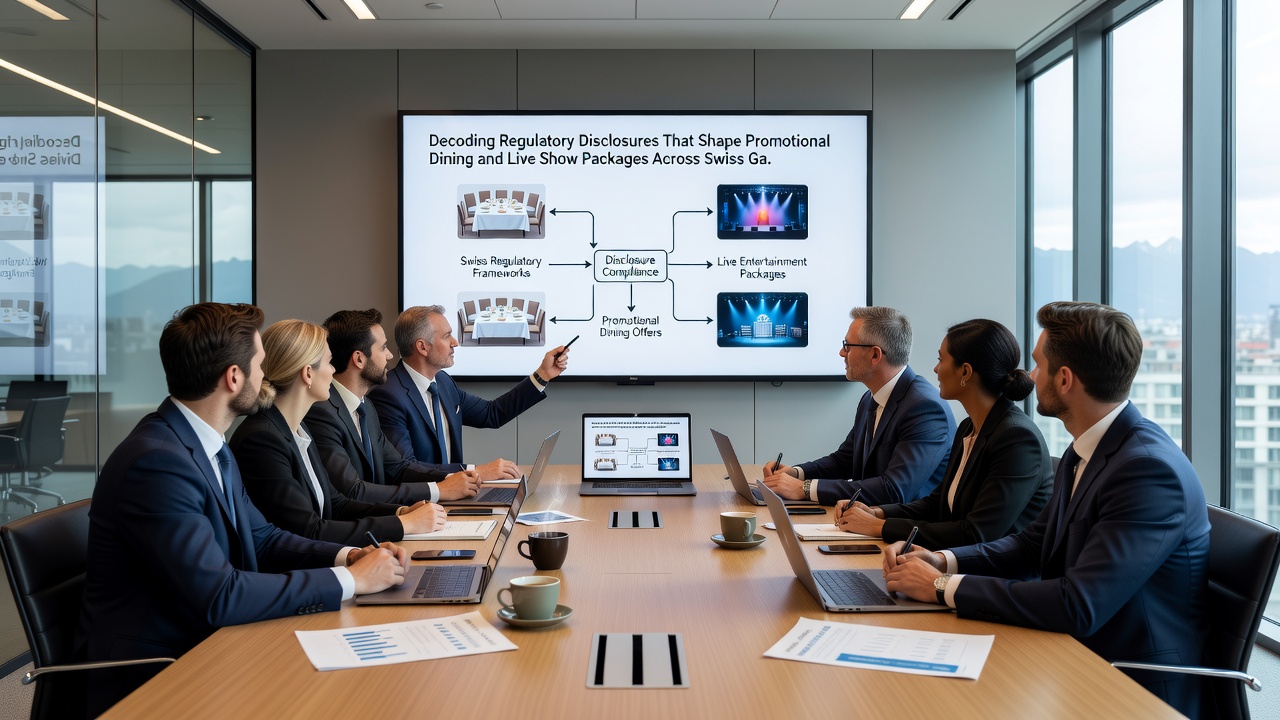
Swiss gaming destinations navigate a detailed web of federal and cantonal rules that dictate how operators must disclose every element of promotional dining and live show packages. These requirements stem from the Federal Act on Games of Chance and Casinos along with oversight from the Swiss Federal Gaming Board, which mandates transparency in all marketing tied to gaming activities. Data from annual regulatory filings shows that venues in locations such as Geneva, Basel, and Zurich submit detailed reports covering pricing structures, eligibility criteria, and bundled entertainment offerings before any promotion reaches the public.
Federal Oversight and Disclosure Mandates
Operators must file comprehensive submissions that outline the exact composition of dining packages paired with live performances, including menu selections, ticket allocations, and any complimentary gaming credits attached to the offer. The Swiss Federal Gaming Board reviews these filings to confirm compliance with advertising restrictions that prohibit misleading claims about winnings or package value. Figures released by the board indicate that more than 180 promotional packages underwent review in the most recent reporting cycle, with adjustments required in roughly 22 percent of cases to align with disclosure standards.
Those who study these filings note that the process often involves cross-referencing with cantonal licensing conditions, since each Swiss canton retains authority to impose additional limits on entertainment promotions. This dual-layer system creates a structured path where operators document every cost component, from food sourcing to artist fees, before launching campaigns.
Impact on Dining and Live Show Bundles
Promotional packages frequently combine multi-course meals with evening shows featuring international artists or local orchestras, yet regulatory disclosures require clear separation of gaming-related incentives from the entertainment components. Industry reports from the European Casino Association reveal that Swiss venues allocate an average of 35 percent of package revenue to verified dining and performance elements, a breakdown that must appear in all public materials. Observers note that this level of detail helps prevent any perception that packages serve primarily as inducements to gamble.
Research compiled by the University of St. Gallen highlights how disclosure rules influence seasonal offerings, with summer packages more likely to feature outdoor terrace dining paired with jazz performances while winter bundles emphasize indoor fine-dining experiences alongside theatrical productions. Each variation demands updated filings that list supplier contracts, performance durations, and guest capacity limits.
June 2026 Regulatory Updates
Beginning in June 2026, the Swiss Federal Gaming Board will introduce enhanced digital disclosure portals that require real-time updates for any changes to package pricing or performer lineups. These portals will link directly to public-facing websites so that potential guests can access the same detailed breakdowns submitted during the approval process. Early notifications distributed to operators indicate that venues must integrate QR codes on all printed promotional materials, directing users to the official filings for verification.
Similar transparency measures have appeared in other jurisdictions, and data shared through the International Association of Gaming Regulators shows that such portals reduce inquiry volumes by an average of 40 percent once fully implemented. Swiss operators are currently mapping their existing systems to meet the June 2026 deadline while maintaining current promotional calendars.
Practical Examples from Major Venues
Venues in the Lake Geneva region have adjusted several signature packages following regulatory feedback, including one that pairs a four-course tasting menu with a cabaret-style revue. The revised disclosure now specifies exact portions of the ticket price allocated to the meal, the performance, and any associated transport services. Another property in the Bernese Oberland region restructured its holiday package to separate live orchestral performances from optional gaming vouchers, presenting each element as a distinct line item in all marketing collateral.
These adjustments reflect broader patterns documented in compliance summaries, where operators increasingly rely on third-party audits to verify that promotional language matches the approved filings. The process ensures that every guest receives accurate information about what the package includes and what remains outside the promotional scope.
Conclusion
Regulatory disclosures continue to define how Swiss gaming destinations structure and present promotional dining and live show packages. The combination of federal mandates, cantonal variations, and upcoming digital requirements scheduled for June 2026 creates a consistent framework that emphasizes transparency across all marketing channels. Data from oversight bodies and academic institutions shows steady refinement of these processes as operators align their offerings with evolving standards.